
How to Connect With a Saint

DSCF6790When John was a teenager he wanted to go to dances. There was one problem.  He couldn’t dance.  So he asked his older sister, Claire, to teach him. That was a disaster. Next he watched people dancing and slowly imitated one step after another. The church also watches a person’s whole life for steps in the dance of faith.  This discernment process helps us find models of heroic virtue and holiness, like St. Teresa of Calcutta or St Therese of Lisieux. These saints become portraits of discipleship. And if we befriend a few, they can become mentors, who help us grow spiritually.

SPEAK WITH FRIENDS AND FAMILY: The road to holiness is also traveled by all who die in Christ, the great cloud of saints described in the Book of Revelation (7:9-17). In addition to canonized saints, there are people who lived ordinary lives with extraordinary love, like Juan Correa, a friend, who studied chemistry in order to teach in his homeland of Colombia. He had unusual gifts of kindness and humility that brought many into our faith-sharing group. As graduation approached, he confessed strong fears about the political dangers that Christians faced in Bogota.  Still, his love for his people drew him home like a magnet.  Just two years later Juan contracted polio.  As he lay paralyzed and dying in an iron lung, his one wish was to listen to Scripture all day.  Within weeks of his death, two of his sisters who were experiencing high-risk pregnancies were healed.

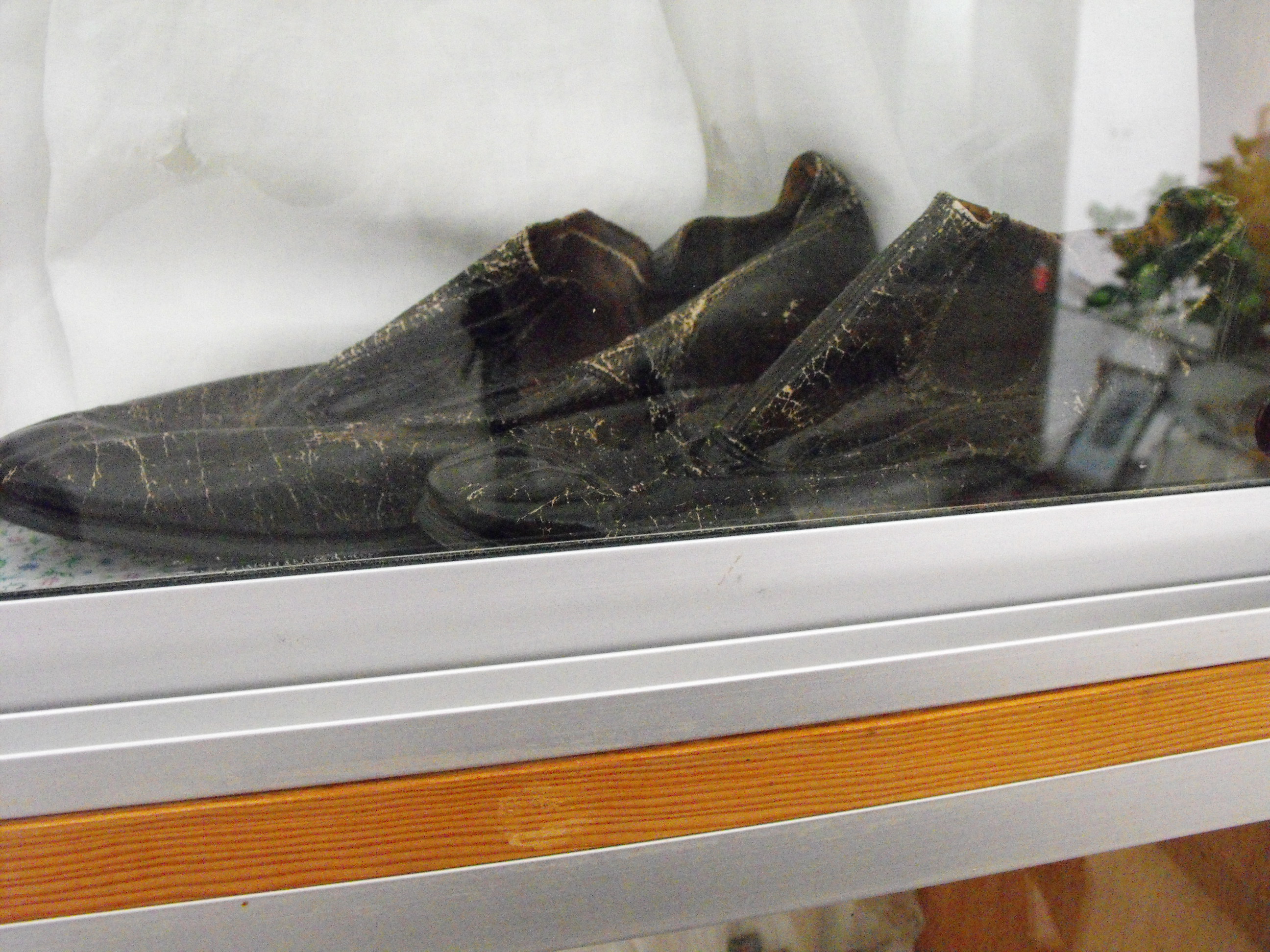
HIGHWAY SIGNS TO GOD: But what help can saints be to you? Below are five steps for discovering your own answers. First, search out saints who can inspire you to draw closer to God.  St. Therese of Lisieux (France, 1873-1897), strove to be a child before God and wrote, “I want to spend my heaven doing good on earth.”  And so she has.  Claire and Harry asked her daily intercession during World War II.  They promised God that if Harry returned safely from fighting in the Pacific, they would name their first daughter Therese.  And so they did. Second, choose a saint who points toward love of others, like St. Teresa of Calcutta who talked about spending heaven rescuing people from dark places.  Teresa can help you become more aware of the dark places that your family and friends inhabit. Then with God’s strength, you can learn how to be a physical and spiritual first responder. Third, learn ways to share the underpinnings of holy service through watching the way a saint explicitly shared about Jesus. Tiny St. Francis Cabrini, a cardiac disease sufferer, donned a hard hat to descend into coal mines and talk about Jesus. (Her shoes are pictured above.)

friends with sts SMBUILD FRIENDSHIPS WITH SAINTS. Fourth, one of the dangers of living in a fast-paced world is the temptation to ignore the saints. But the effort to search out a few as friends is well worth it, since they can be like older brothers and sisters, or co-workers in faith. Begin by reading short bios online at websites like Catholic Online or this brief listing. Here you can acquaint yourself with “your spiritual neighborhood” and choose one or two to learn about in-depth. You might also want to read, “Making Friends with the Saints.”

Our fifth and finally suggestion is to speak with your new friend often about the place where your lives intersect. For example: St. Teresa of Calcutta was once asked by a reporter what is wrong with the church. Her reply was, “Me and you!” So a regular church-goer might pray, “St. Teresa, I have done my best to pray and to serve others. How can I be the problem? Help me listen to God in new ways. Help me be more compassionate. Help me be a humble servant in my parish and in every-day life. Amen.” And then finish by speaking with Jesus, the love of your saintly friend’s life.

Posted in growth for evangelizers | Comments Off on How to Connect With a Saint

Mini-Olympics Quiz: Are You an Athlete?

gymnastic rach copy

First, choose a statement.

Yes. I jog, step or whatever gets me points on my Fitbit or keeps me in shape.

Sort of.  I was when I was a kid.

Yes. I run in the rat race.

No. I am a couch potato cheerleader.

No. I exercise my brain (or knife and fork) instead.

Now, choose one of the above statements about your spiritual life.

Why? because the Bible challenges us to be trained athletes in living and sharing our faith, no matter what our physical and spiritual condition. The Letter to the Hebrews challenges us to “throw off everything that hinders and the sin that so easily entangles. And let us run with perseverance the race marked out for us” (12:1) But how do we train to be spiritual athletes?

  1. Consider heavy lifting. Open that big Bible. Call out loud to the Holy Spirit. Stand, then kneel, then sit, while you talk to Jesus. Spend a little time in God’s presence every day.
  2. Use those fingers to text, email or call a friend who is willing to share faith with you. Consider driving to a bible study or a Mass, because training works better when you gather with other spiritual athletes. And while you are at it, walk around the parking lot a few times.
  3. Leave your house each day on a search for someone who needs mercy, encouragement, or just a smile. Spiritual muscles atrophy unless we put them in the service of loving those around us.
  4. Take you spiritual skill set out in public, not to compete but to move in the Spirit, who synchronizes our talents. Open your mouth and your heart to share words of faith like, “GOD bless you!” or “I know God wants to help you!” or “May I pray for you right now?” Here is an example.
  5. Move toward the prize of eternal, pulsating life in God. Heaven is not a static, boring fairy tale. It is a dynamic participation in all the energy between Father, Son and Holy Spirit that has already spilled out onto our world and sweeps us up into a new creation.

Paul’s Letter to the Philippians sums up your call to be a spiritual athlete, “Forgetting what lies behind but straining forward to what lies ahead, I continue my pursuit toward the goal, the prize of God’s upward calling, in Christ Jesus.”(3:13, 14)

Posted in growth for evangelizers, how to share faith | Comments Off on Mini-Olympics Quiz: Are You an Athlete?

A Lament in Times of Terror

It was a treacherous time during the late sixties. Half a dozen burly college men marched down the hill with torches, hell-bent on burning the ROTC building. We were next door at a faith sharing meeting. Four of us, mostly conscientious objectors, ran out to defend the building. Two stayed behind to beg for God’s help. That’s when it started pouring buckets of rain. God had arranged a standoff…

How do you respond to yet another violent attack, whether near of far? What about political mayhem or family emergencies? Do you feel like screaming or crying? Or do you feel numb? The book of Psalms is chuck-full of responses to terror that are called ‘laments’. This word comes from a Latin word meaning ‘to howl’ or ‘to mourn loudly.’ Some psalms literally groan and wail. Some whimper. And even though some sound like a feverish mind gone awry, they are also acts of faith because they are addressed to God. Are you ready to give God all the terror and human rubbish that disturbs you?

Step One: Choose one of these laments: Psalms 13; 22:1-11; 42:1-5; 130; or 142. Pray this psalm aloud and slowly. Then pray it again.

Step Two: Recall a difficulty that disturbs you. It can be anything, large or small, personal or global, anything that absorbs your thoughts and moves you to the edges of worry and fear. Now bring this difficulty into God’s presence by writing your own lament.

Greeting (or title for God):   _________________________

Describe the threatening situation in a few words: ________________________________________

Step Three: Step back and state God’s point of view (a scriptural image or a statement from the Creed might help): __________________________________________________________

Step Four: Ask God for help. Then add a surrender prayer:

______________________________________________________________

______________________________________________________________

Step Five: Choose a psalm of trust and thanksgiving—Psalms16; 23; 34:1-10; 91:1-10; or 124. Pray it slowly. Then finish by reading this passage aloud:

Who will separate us from the love of Christ? Will hardship, or distress, or persecution, or famine, or nakedness, or peril, (terrorism, political mayhem, extreme weather) or sword?

No, in all these things we are more than conquerors through him who loved us. For I am convinced that neither death, nor life, nor angels, nor rulers, nor things present, nor things to come, nor powers, nor height, nor depth, nor anything else in all creation, will be able to separate us from the love of God in Christ Jesus our Lord.      (Romans 8:35, 38-39)

Adapted from Praying for our Adult Sons and Daughters

Posted in encounter Father, Son and Spirit, evangelizing events unplugged | Comments Off on A Lament in Times of Terror