Reaching Out to Father-God

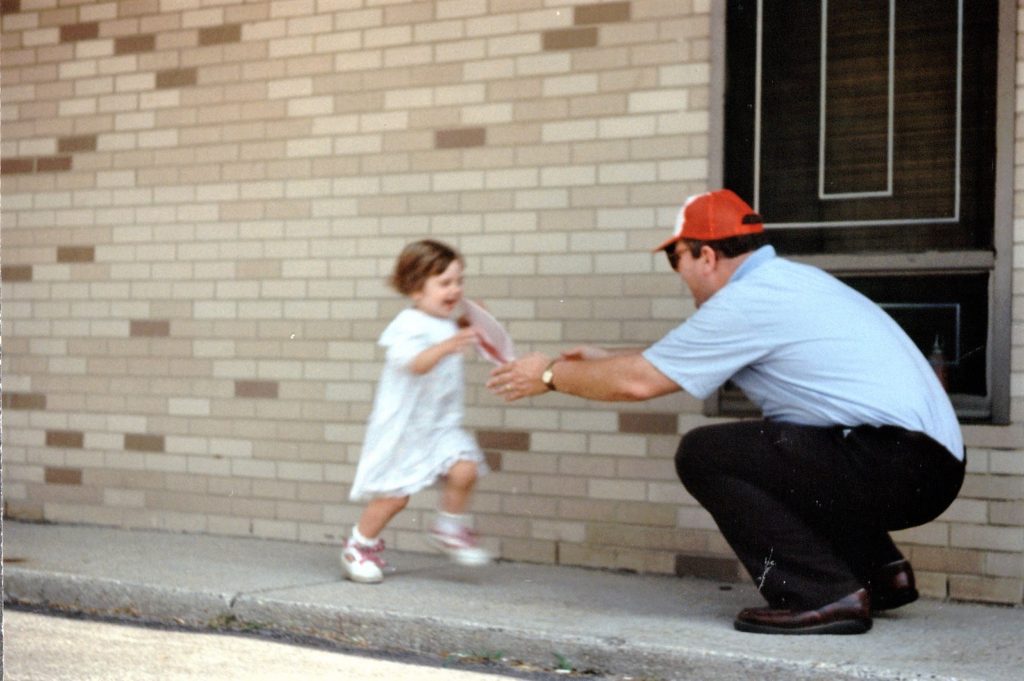
While our faith sharing group was meditating on the “Our Father” Jim became very agitated and blurted out that he could probably love Jesus, but had no use for the Father. We listened to Jim’s pain and encouraged him to slowly pray with the “Our Father” during the following week. At our next gathering Jim joyfully announced that he had been adopted… He explained that memories of his own father had surfaced as he prayed: His dad’s frequent admissions into psychiatric institutions, his inability to show affection and his eventual suicide. As Jim had explored additional Scriptures about God, the Father, these words had leapt out at him. “You received a spirit of adoption, through which we cry, Abba, ‘Father!’” (Romans 8:15). Jim felt healed, nurtured and accepted from head to toe. Since then he prefers to pray to his “Father-God”.


The Father’s Gift. Jim’s ability to place his broken life before the Father was a gift. Our Father freely shares such healing gifts and is always faithful to an everlasting covenant love. Each of us can go deeper in this love and truly say that the Father of Abraham, Moses, David and Jesus is my Father as well. We can rely on this remarkable Father-God who creates and personally sustains billions of children. This is an important truth to remember when we feel like orphans, who are abandoned, or lacking moral leadership from the government, or feeling overwhelmed by life-threatening tragedies.

The Father’s Strength: Our Father is intimately involved in every breath, all or our movements, our thoughts, our relationships. It is through the Father’s love that our inner self grows strong and capable of love. Each of us is given God’s Spirit, who helps us cry out in time of trouble, like Jesus during the anguish of the cross (Psalms 22). Jim was not only healed, but received help in loving his own small children. St. Paul’s prayer in Ephesians describes what can happen. May God “grant you in accord with the riches of his glory… that you (be) rooted and grounded in love” (Ephesians 3:17).

The Father’s Blessing. Encountering the Father also involves allowing the Father’s gentle, but persistent, strength to draws us into a spiritual family, so we can grow alongside Jesus, our brother. It is here that we grow and discover the particular gifts that our Creator has given us. In times of pandemic, when it is not possible to receive the Eucharist together, you can imagine yourself on the day of your Baptism. Then picture God, the Father, hovering over you, or cradling you, and smiling as you are filled with new life again and again. And remember: the whole timeless communion of saints is always gathered around you also.

Journey to the Father. Every time you get in the car or go for a walk, even if your trip is just to a supermarket, remember that you are part of a people on a journey toward the Father through the grace and strength of the Spirit. And together, with every step of this journey, we are all meant to be swept up into the relationships between Father, Son and Spirit. The result is a burning hunger for sharing this journey with all God’s children, the way Mary did, by bringing Jesus into the world. Through her we know that ultimately; corruption, death, sickness and evil have no place in our Father’s house. So, we tell others about this journey, this inheritance, especially those in need.

Father, I abandon myself into your hands; do with me what you will… for I love you, Lord, and so need to give myself into your hands without reserve, and with boundless confidence, for you are my Father.             Blessed Charles de Foucauld (1858-1916)

Posted in encounter Father, Son and Spirit, growth for evangelizers | Tagged , , | Comments Off on Reaching Out to Father-God

Seven Reasons to Hope from Pope Francis

“It’s enough to discourage a Saint,” Therese’s grandmother would say when things weren’t going well. You and I might be tempted to say something similar in the face of widespread protests over racial injustices and police brutality; as well as regional increases in COVID-19 cases, and predictions of a second wave of this plague in the fall. It is hard to maintain hope about the future. But Pope Francis still encourages us to have hope. How? What does he know that we do not? In the book, On Hope, a collection of his teachings from general audiences, we discover at least seven reasons to persevere in hope.

First, we cannot manufacture real hope by our own power. Our possessions, scientific advances, and achievements may make us happy for a time, but these will not give us lasting hope. “Let us keep this in mind: our assurance will not save us; the only certainty that will save us is that of hope in God” (Pope Francis).

 Second, the foundation of Christian hope is God’s love for each of us. God loves us first! (1 John 4:19) On our own, we are incomplete and sinners. But when we turn and give ourselves to Jesus Christ, the Lord opens an overflowing fountain of freedom and salvation. Each day, Jesus walks with us. No matter what we face. We can still cling to an expectation that the power and love of the Holy Spirit will come.

Third, hope is a journey with Jesus Christ to the Father. Every small or large “yes” that we give to Jesus is a seed of hope. He will lead us through the darkness to the light. Hope is not afraid of our current reality however challenging or difficult.

Fourth, prayer leads us forward in hope. We entrust ourselves daily to Jesus without demanding anything. This kind of hope entails a humble heart, not one that is full of ourselves, our achievements, or even our failures.

Fifth, hope thrives in a vital Christian community. We can draw hope from brothers and sisters in Jesus. Each one teaches the other how to hope. Each one helps fan the flames of hope when times are tough. The Holy Spirit wants to form and re-form our communities in a Perennial Pentecost, an ongoing experience of his power and presence (See Acts of the Apostles 2,4, 8,9,10,11).

Sixth, hope doesn’t lead to discrediting or marginalizing others. We are meant to discover new brothers and sisters in times of waiting, longing, expecting, and working for healing, peace, and justice. “Dear brothers and sisters in the United States, I have witnessed with great concern the disturbing social unrest in your nation in these past days, following the tragic death of Mr. George Floyd. We cannot tolerate or turn a blind eye to racism and exclusion in any form and yet claim to defend the sacredness of every human life… Nothing is gained by violence and so much is lost.” (Pope Francis, June 3, 2020)

Seventh, to live in Christian hope, we each need to be born anew in the Holy Spirit. We need to draw from the living water of the Spirit through the sacraments (flowing forth from Baptism), prayer, and adoration. 

To summarize. Our ability to love and to serve flows from God, who loves us first in Jesus Christ. We are incapable of loving others, according to their needs, without the gift of infinite mercy. This gift is given through God’s Holy Spirit so that we can share that mercy with others. “Jesus is our hope. Nothing—not even evil or death—is able to separate us from the saving power of his love.” (Pope Francis)

Posted in encounter Father, Son and Spirit, growth for evangelizers | Tagged , , | Comments Off on Seven Reasons to Hope from Pope Francis

10 Post- Pandemic ‘Resolutions’ Christians Might Make

People have been making “New Year’s Resolutions” for 4,000 years. The Babylonians are an example; promises about things like –paying back debts or returning borrowed objects. Early Christians also declared the first day of the New Year as a holy time to reflect on past mistakes and to choose to live a better life for Jesus Christ. Even in today’s secular world as many as 46% of us make “New Year’s Resolutions” about improving ourselves in the coming year.

We hope that “Lockdowns” and “stay-at-home” orders have given you time to reassess what you are doing with your life. There is nothing like a pandemic to make space in our often-frantic lives. The “reopening” of our economy is another, similar opportunity to make resolutions about daily life, socializing, and even parish worship. Then, with God’s help, it will be possible to carry some of the positive daily life changes forward. Here are ten suggestions for post-pandemic behaviors and a “new normal” as Christians:

  1. Thank God for the simple blessings in our lives (family members, the internet, toilet paper).
  2. Be more willing to accept help from others and advice from accurate sources. Study and pray to the Holy Spirit for discernment when this becomes difficult.
  3. Restructure your days to include personal and family prayer time.
  4. Reach out to support family, friends, and neighbors in a consistent way.
  5. Use the internet and cell phones to foster relationships (Facebook, Zoom, instant messaging, Facetime and other social media). Learn how if necessary.
  6. Be more intentional about scheduling shared meals [when allowed] with family and friends in places where air can circulate freely.
  7. Eat right, exercise daily, and get better sleep.
  8. Reassess what you do with your spare time and money. What are your “real needs”, not your anxiety-based desires. Give to your parish.
  9. Treat adversity as an opportunity for intellectual, emotional and spiritual healing.
  10.  Exercise compassion for and communion with those who suffer: the poor, homeless, sick, aged, and those who have no faith tradition to call their own.

Finally, this pandemic and a “new normal” can help us repent of thinking that we are in control of our lives. We are not! We need to surrender to God’s gift of humility. What we CAN control is our response to God’s ever-faithful, but sometimes illusive, presence. “Even though I walk through the darkest valley, I fear no evil; for you are with me; your rod and your staff— they comfort me.” (Ps. 23:4) And as Pope Francis points out, “There is never a reason to lose hope. Jesus says: ‘And remember, I am with you always, to the end of the age.’” (Mt. 28:20)

Posted in Uncategorized | Tagged , | Comments Off on 10 Post- Pandemic ‘Resolutions’ Christians Might Make