
Understanding Why Catholics Become Inactive

Inactive Catholics can be family: parents, siblings, children, grandchildren, nieces; as well as friends, neighbors, fellow workers. Though they may not be regular Sunday church-goers “YET,” they are still God’s children and our brothers and sisters in Jesus. And we  still share the same Baptismal call: to know the everlasting covenant love of God the Father, Son and Holy Spirit. Even though they have vacated our pews, we cannot assume what their reasons are. But rather respect their spiritual lives.

[WATCH A VIDEO ABOUT THE DECREASE AMONG CHURCHGOERS]

This means we are called to have a “deep” compassion for all who have decided to be absent from Sunday worship with us. This compassion is a crucial first step when reaching out to inactive Catholics. This concern is built upon living a missionary, evangelizing life-style. The United States Conference of Catholic Bishops teaches that, “Every Catholic can be a minister of welcome, reconciliation, and understanding to those who have stopped practicing the faith.” (Go and Make Disciples, Section 40).

First of all, compassion means not using derogatory words to describe those who are not regular Mass-goers, such as: back-sliding, lapsed, fallen-away, baptized pagans, home-Baptists, lost souls, etc. Instead  we are called to approach inactive Catholics in respectful ways and offer Jesus-centered invitations to consider the active practice of Catholicism, when the time is right.

Secondly, we need to have humility. The simple truth is that all of us are both active and inactive in some parts of our Catholic Faith: conversion, prayer, study, sacraments, community, service, works of mercy, social justice, and evangelizing others. We are all converted and unconverted, saints and sinners in some parts of our lives. So, we can assume that we may have faced some of the same struggles with faith.

Extensive surveys and studies about Catholic beliefs and practices have been conducted over the past 25 years. These studies indicate that only 15-23% of Catholics in the United States are regulars at Sunday Mass (at least in our part of the country). Studies indicate that many Catholics are not regular churchgoers for one or more of the eighteen reasons listed below.

Individual Activity (3-5 mins.):

  1. Circle the top three reasons why people in your parish seem to have become inactive.
  2. Check issues below that you have struggled with in your own faith, even though you have remained active or returned to being active in your faith.

Reasons for Becoming Inactive:

  • Do not experience God’s presence in the Catholic community
  • Do not experience caring relationships in encounter with Catholics in a parish
  • Difficulty bonding with people who do not share the same culture
  • See Catholicism as complex and unrelated to their lives
  • Only had a weak Catholic identity in the first place
  • Catholic Faith and creed seem unrelated to daily life
  • “Spiritual, but not religious.” Turned off by organized religion
  • See self as on a private, not communal, quest for personal meaning
  • Experienced hurt from clergy or lay Catholics
  • Came into conflict with Church teachings
  • Misled by people who attack the Church
  • Are in marriages not recognized by the Church
  • Married outside of the Catholic faith (other Christian group or world religion)
  • Do not come due to chronic sickness or advanced age
  • Got busy and did not take the time to get involved
  • Relocated (new college, job, or home) and never reconnected with a Catholic parish
  • Unaware of a nearby Catholic community
  • Home parish closed/merged when diocese reconfigured parishes

Share with an active Catholic family member, friend, or in a small parish/neighborhood group (10-20 min.):

  • Invite three (3) active Catholic friends, family members, or acquaintances (individually or together) to read this article with you and share their top three reasons why they think some people in their parish seem to have become inactive.
  • Just listen. After the other person(s) give their answers, share what your top three reasons are.
  • Then share: “What has kept you living as an active Catholic or brought you back to being an active Catholic?” After they answer, give your own answer.
Posted in encounter Father, Son and Spirit, how to share faith | Comments Off on Understanding Why Catholics Become Inactive

Go and Find a Way to Evangelize

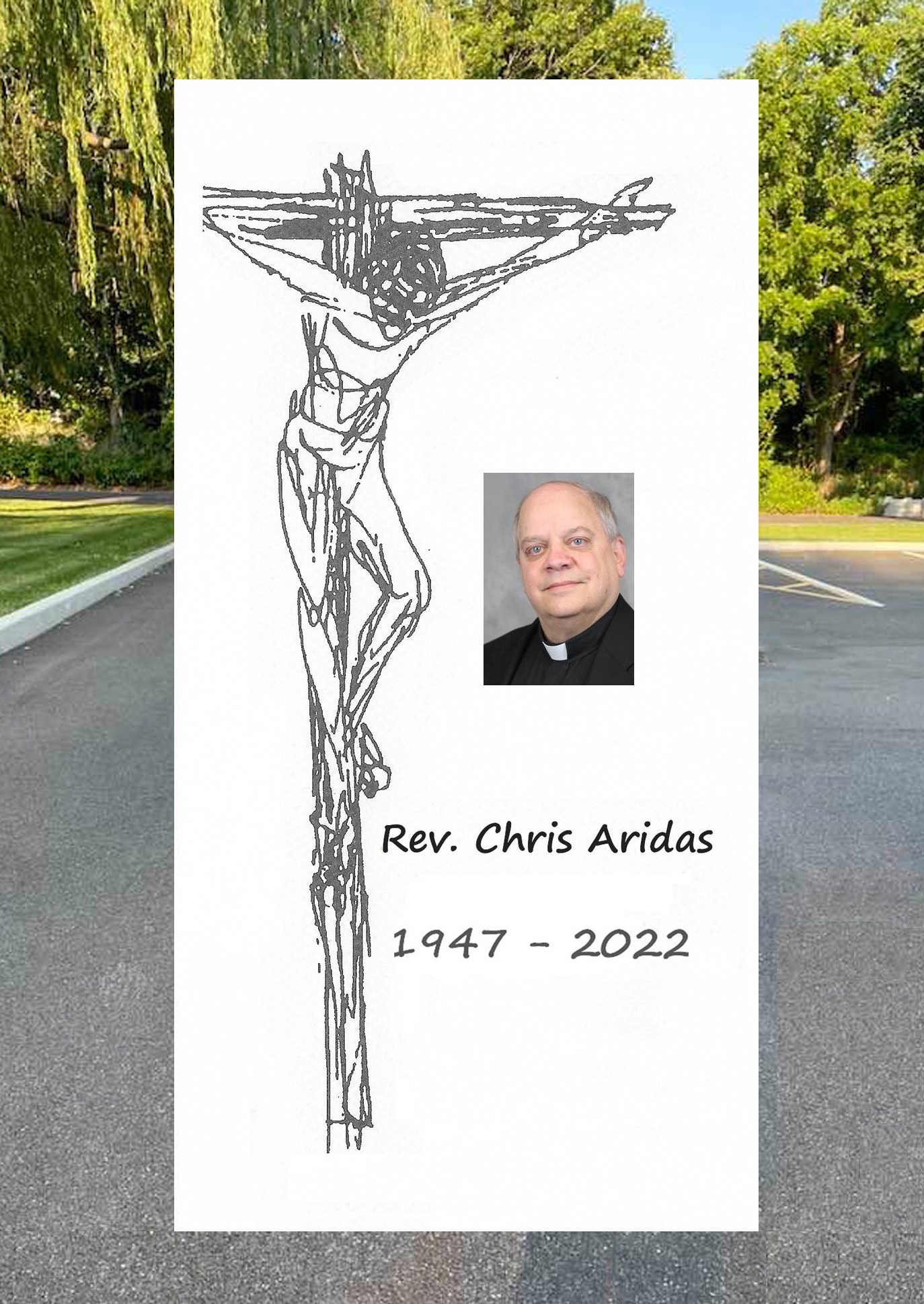
We thank God for our friend and brother in evangelizing, Fr. Chris Aridas (Nov. 12, 1947 – Feb. 2, 2022). He was truly “led by the Spirit and driven by God’s Word”. We all met in 1986, when John began working with Fr. Chris, and others, on a diocesan level, to offer spiritual renewal to Catholic believers. The result was a dynamic approach that combined Catholic theology, adult catechesis and “the best of the Charismatic Renewal.”

Over the next fourteen years, secondary strategies emerged as we were “led by the Spirit and driven by God’s word.”

  1. Reimagining ways to train leaders of existing groups in how to evangelize, through more deliberate invitations and faith sharing. Leaders were from parish-based groups like Little Rock Scripture Studies (LRSS), RENEW International groups, and charismatic prayer groups.
  2. Sharpening the focus of large group parish events, most notably healing masses and Ash Wednesday services that led into Lenten missions; as well as week-long, summer Bible Institutes; and dozens of ongoing diocesan workshops.
  3. Ecumenical efforts to evangelize. In 1990, we assisted 70 parishes in offering a Catholic follow up to a regional Billy Graham Crusade. This included basic training in evangelization for 500-600 people and an influx of 600 participants into LRSS groups as follow-up.
  4. Intentional, free-standing training in person-to-person evangelizing. This program was first presented to 10,000 people as “Bringing Christ to My Everyday World” at the North American Congress on the Holy Spirit and World Evangelism. Additional versions of this training were condensed into a one-day workshop on Catholic evangelization called, “Simple Ways Catholics Can Share Faith”. It was offered in dozens of parishes.

We share these strategies to inspire a life-long passion for “no-holes-barred” innovations that stretch us to respond to people’s spiritual needs. We encourage you and to find ways to bring the Gospel to life, using both diocesan and parish approaches.

Here are excerpts from some of Fr. Chris’ writings and emails that speak of his burning desire to be led by the Spirit, to evangelize, and to enkindle faith.

[From a 2015 parish letter] Since the late 16th and early 17th centuries, the Catholic strategy for building up the faithful has been childhood catechesis and sacramental initiation. Children’s classes and the Catholic school system were cutting-edge responses to the crisis of the Protestant Reformation. It was an extraordinary vision that worked for an extended period of time… Evidence today, however, suggests that what worked in the 17th century does not work in the 21st, now that most of our young adults become “unaffiliated” Catholics, who no longer find their way back to the Church, when they are ready to marry and have children. In fact, the number of marriages celebrated in the Church has decreased by 60% in the past 50 years, although the number of “Catholics” has increased by almost 17 million. Other sacraments have suffered as well.

So, now our goal for all of parish life is clear: proclaim the “Good News,” centered on the raising of Jesus from the dead. Tell everyone that God’s plan for new life includes all; invites all; and embraces all who are willing to follow the risen Lord as disciples [of all ages].

[from 2020 emails] Right now, my heart is being moved to intercessory prayer. It’s a natural spot since I have been taking my 96-year-old mother to doctor visits, the hospital and/or to a rehab unit…

Then later, I have pretty much been living at her condo, assisted by a full-time aide. Still, I am blessed to be with her during this time…

Since my mother’s death in May, I have been praying that I will be able to follow what the Lord wants me to do next, as I continue my service to Him. The Lord and I are in the process of discussing opportunities and timelines. Thus far, it appears that the Lord’s timeline is the one we’re going to work with for the time being. We’ll see how that pans out.

[Spring 2021] I have retired. But in the mornings, I still offer Daily Video Reflections for the people of Assumption Parish while we are all apart during the pandemic… And my heart is being increasingly moved to intercessory prayer. I spend most afternoons doing so. Now I have lots of time to follow the Spirit’s lead in praying for our church; which is in need of wisdom, courage, and new avenues for responding to the pastoral needs of its members. So, keep the prayers coming. I’m always willing to accept prayers at any time from anyone!


You may listen to A Sampling of Daily Reflections by Fr. Chris Aridas .

Posted in evangelizing events unplugged, how to share faith | Comments Off on Go and Find a Way to Evangelize

EVANGELIZATION WORKOUT: Who Is God to You?

The first step in evangelizing is to move and be moved by God and by the spiritual needs of others. And our hope is also that both the person who shares the Good News about Jesus and the one who receives this life-giving message, are moved by the Holy Spirit. So “getting in shape” and “keeping fit” for the evangelizing mission of Jesus Christ and the Church means improving our ability to move through regular “working outs”! The goal is to stretch our capacity to reach out to others with the Good News of Jesus in everyday life. 

Who is God for You?

Beginning with a Baylor University Institute for Studies of Religion over 15 years ago, many of us were surprised to realize that American Catholics seem to have four different preferred images of who God is. Although we cannot change their preferred image(s), we need to understand their thoughts and the story of how they came to believe in them.

We always try listen in a non-judgmental way and without giving advice. At some point we might ask, “How is that image working for you?” If someone says, “I don’t believe in God?” Then we might ask, “Can you tell me about this God that you don’t believe in?” At some point in our conversation, we also hope to share who God is for us and how we came to believe this way.

“Who is God for YOU?” Individual Activity (5 min.)

Below are short descriptions of the major images of God that were surfaced in the Baylor University study. In silence, reflect on your preferred image of God, the one that usually arises have when you pray, study, worship, or speak to others about the Lord. Keep in mind that many of us slide from one image to another quite easily.

Circle the description of God that is closest to your image.

□          Authoritative God: highly involved in personal decision-making and world affairs—responsible for economic problems, earthquakes, tsunamis—sends down punishment to unfaithful people now and in the future.

□          Benevolent God: highly involved and active in our daily lives, but not in angry and wrathful ways—positive influence upon, and deeply engaged in, our world.

□          Critical God: does not interact directly with the world, but views it and us unfavorably. God’s displeasure with us will be felt in divine justice after we die.

□          Distant God: does not “do” things in the world nor hold any opinions about us or world events. God is a cosmic force that set the laws of nature in motion and walked away.

Share within a small parish/neighborhood group (3 or 4 people—10-20 min.)

  1. Each person explains which of these major images is “God for YOU.” Why did you choose that image(s)?
  2. Next go back over the four images and put the initials of three people from your everyday life next to what you would guess is their primary image of God. [if appropriate, ask them later.]
  3. Share about the similarities and differences that you and the people in your group have about the images of God.
  4. Why is it important to understand what people’s operative image of God is when we try to reach out to share faith, to evangelize, and to invite others to come back to Jesus and the Mass?

People-Homework: Share with a family member or friend

You can use this exercise to informally survey friends and family about their perceptions about God. An opening might be, “Can you help me with homework I have received from my parish?” Use questions 1 – 3, but skip #4 above.

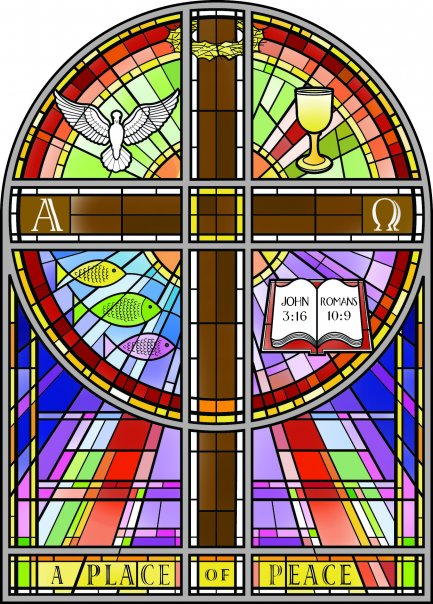
Window illustration by Peter J Boucher

Posted in encounter Father, Son and Spirit, how to share faith | Comments Off on EVANGELIZATION WORKOUT: Who Is God to You?